
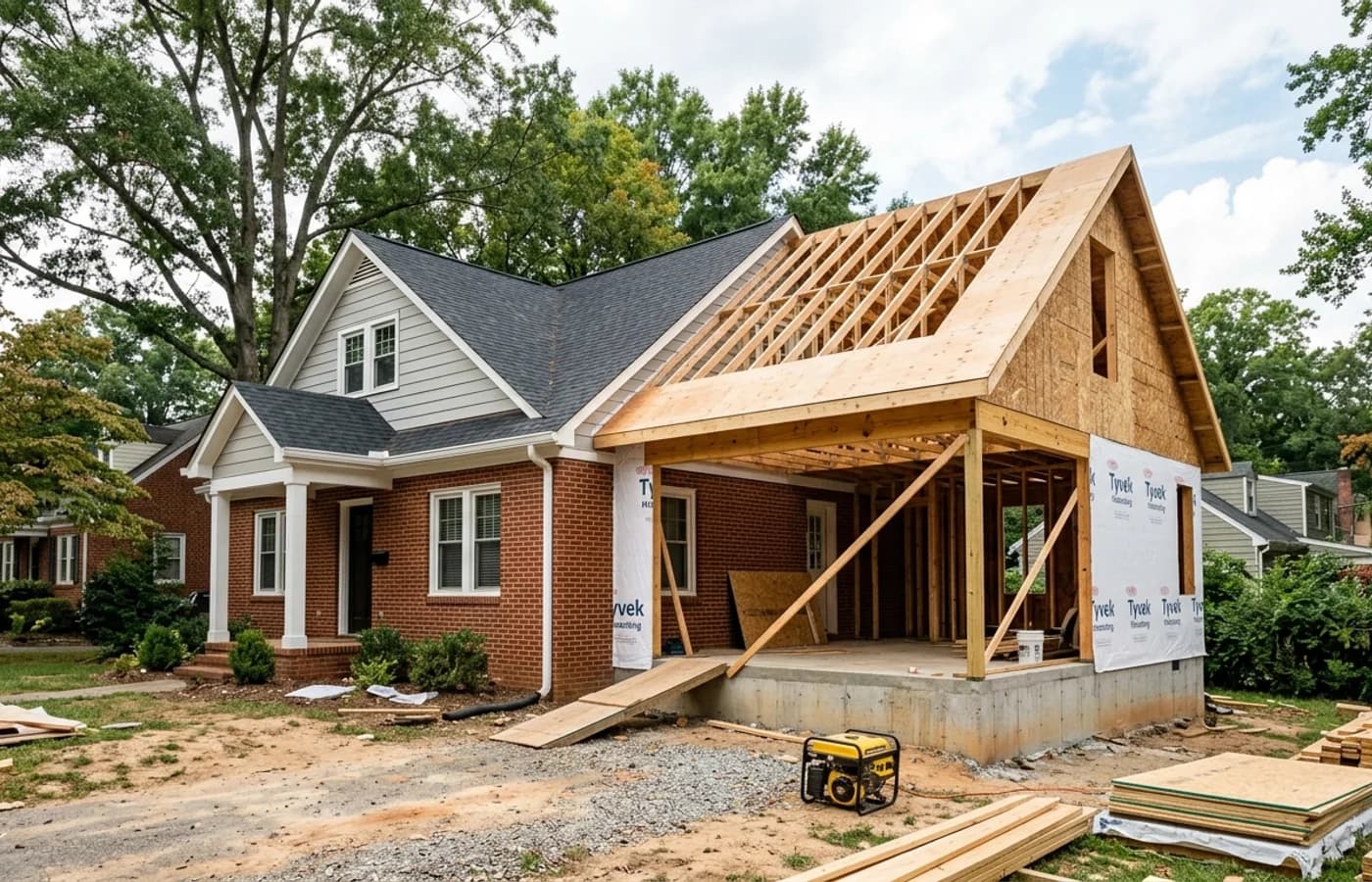
A home addition in Durham can vary widely because you are not just buying square footage. You are tying new structure into an existing home, matching the exterior, extending systems, handling permits, and building a space that needs to feel original once it is finished.
That is why rough averages can mislead homeowners. A simple bedroom addition is not the same as a primary suite with a bathroom. A garage conversion is not the same as a two-story addition. A sunroom is not the same as a fully conditioned room with plumbing.
The smarter move is to understand the cost drivers before you start collecting numbers.
What affects home addition cost the most?
Foundation work is one of the first big variables. Soil, grading, drainage, crawlspace conditions, and access all affect how the addition starts.
The roof tie-in is another major factor. A good addition looks like it belongs on the home. That may require careful roof framing, matching shingles, siding, trim, windows, and proportions.
Mechanical systems matter too. If the addition needs HVAC, plumbing, electrical, or a bathroom, the budget changes. Kitchens and bathrooms add cost because they bring more trades, more fixtures, and more inspections.
Our home additions service is built around this kind of planning. The goal is not just extra space. It is extra space that works.
Why design matters before pricing
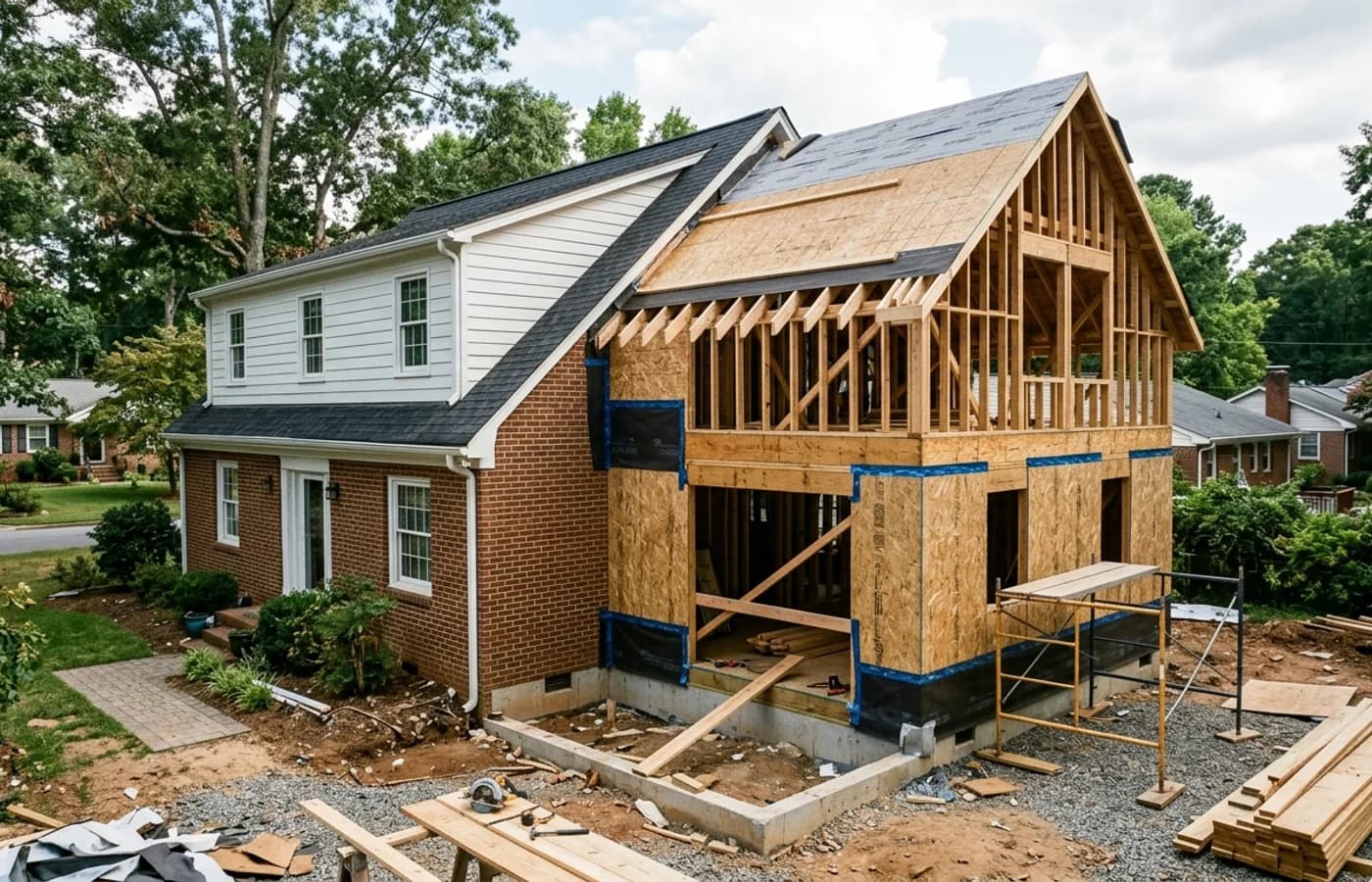
Homeowners often want a number before design. That is understandable. But additions need enough design clarity to price responsibly.
Without a layout, roof concept, finish direction, and structural understanding, a quote is mostly a guess. That creates stress later when the real scope shows up.
Build Moore Exteriors approaches additions through design, build, and renovate experience. We look at how the home lives now, what problem the addition solves, and how to make the new space feel natural.
If you are still early, read What Should You Ask a Contractor Before a Home Addition? before you start comparing estimates.
What kinds of additions are common in Durham?
Primary suite additions are common for homeowners who want to stay in the home longer. Family room additions help older homes feel more open. Sunrooms and screened porch conversions add flexible living space with more light.
Some families need a bedroom, office, mudroom, or expanded kitchen. Others need better connection to the backyard.
There is no single best addition. The right addition solves a specific problem in your home.
Is a sunroom considered a home addition?
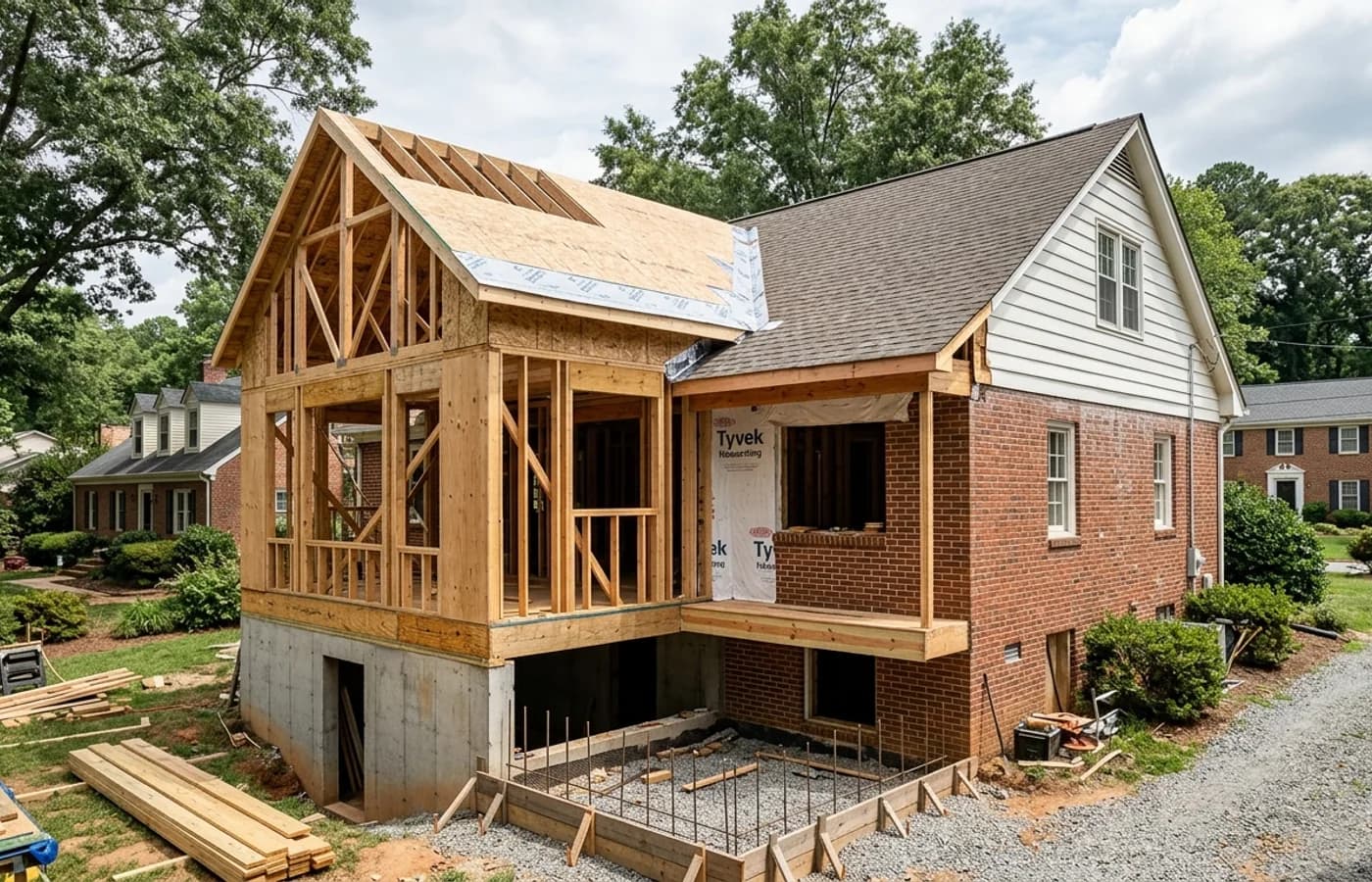
Sometimes. A sunroom can be a lighter outdoor living project or a more finished addition depending on design, enclosure, and conditioning.
If you want bright space without the full complexity of a traditional addition, compare our sunrooms with a standard room addition. If you mainly want airflow and bug protection, a screened porch may be the better fit.
For the practical comparison, see Is a Sunroom or Screened Porch Better for North Carolina Homes?.
How can you control the budget?
Make decisions early. Scope creep gets expensive when selections change after planning has started.
Stay honest about priorities. If the non-negotiable is a larger footprint, finishes may need to stay simpler. If the non-negotiable is premium finishes, the footprint may need discipline.
Also, do not ignore existing conditions. Drainage, rot, outdated electrical, foundation surprises, and roof complexity can all affect budget. A contractor who points those out early is protecting you.
Bottom line
The cost of a Durham home addition depends on scope, structure, systems, and finish level. Square footage is only part of the story.
Build Moore Exteriors helps Triangle homeowners plan additions that fit the house, solve the real space problem, and hold up over time. If you are considering an addition in Durham, Raleigh, Hillsborough, Chapel Hill, or nearby communities, schedule a free estimate and start with a clear plan.